Pre-2016
Childhood, elementary, and middle school years.
2016-2019
High school years; during the course of which, I picked up most of the Autodesk suite, as well as traditional drafting methods. Placed into honors each year; accepted into university's BSAS program in late 2019 thanks to a GPA of 3.62 and a 31/36 on the ACT. Took four years of German and still retain a decent amount!
Academic year 2020
First year of university; learned model building, project presentation, building programming, architectural history, and Zoom Meetings. Also took Calculus, Psychology, Physics, and a general History course.
The main design project for the year was to design a home that reflected the needs of a bird, or in other words, a place whose design was modeled after certain "bird" traits. I picked a Cardinal as my bird, and designed a house with a garden to supplement its diet, a wide facade to assist its territorial nature, and a concave shape to allow its defense call to travel further. Since cardinals typically mate for life, I designed it to have multiple bedrooms as well. We also did precedent studies on different housing projects and their impact on housing in architecture.
I also got a job as a cashier at my local grocery store, where I learned to work with customers and bosses. I also learned to operate point-of-sale systems and quickly solve the many problems they'd throw at me. I'd work at the same store each summer until 2024, when I moved to my architecture internship.
Academic year 2021
Second year of university; learned more about building programming, as well as structural design, architectural history,
Our first projects were spent making various "urban intervention" projects - the first was a modification of the Annex, where I designed a viewing gallery meant for architecture students to put up their boards for the public to see. The walkway had life-size versions of different drafting tools, including a compass, architect's scale, and a t-square.
The next urban intervention we designed was a temporary installment that took place at one of the main streets in town. I chose to design a "city fair" of sorts, where the street would be turned into a live music venue, and local businesses could bring merchandise outside. Restaurants on the street could even serve their food outside to patrons.
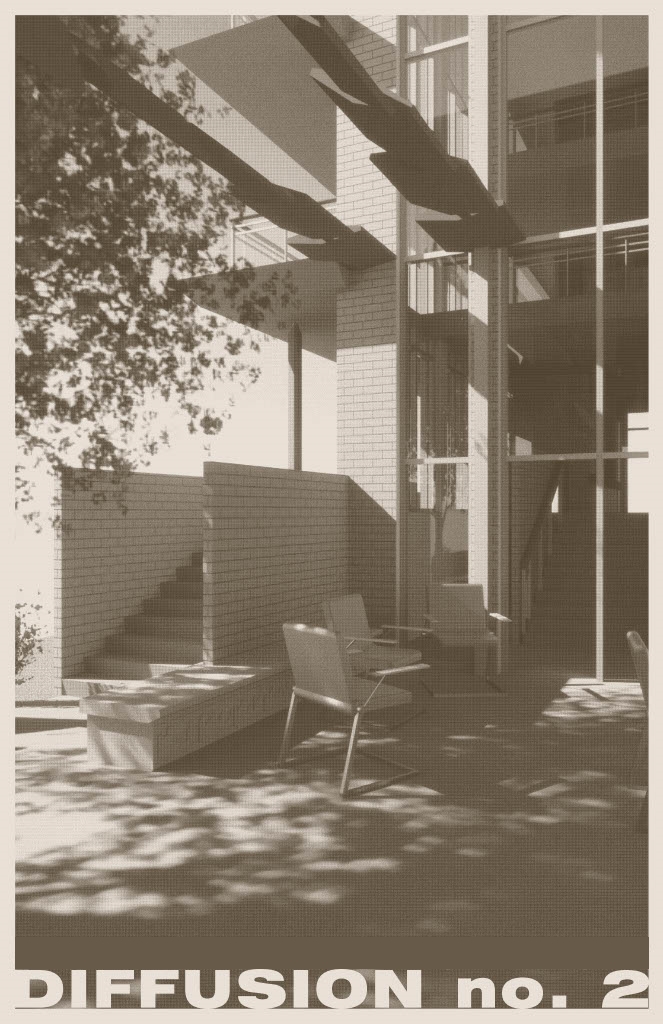
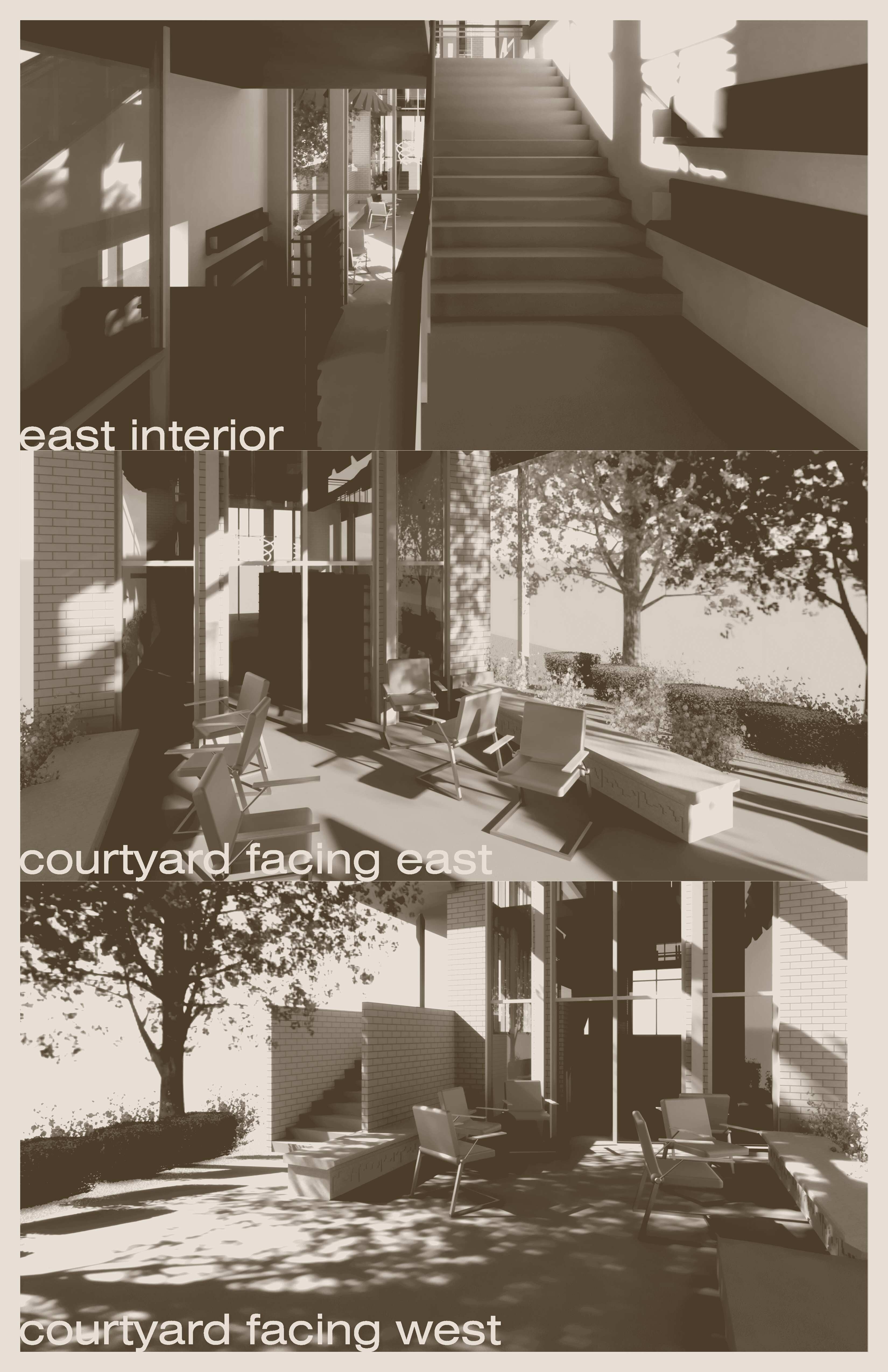
The final project of the second year was to design a restaurant or retail store in a thin lot in Chicago - based on an action verb. Called "Diffusion," the driving principle were these rotating fins that moved according to the surrounding light and wind conditions on that day, and to rely on them as much as possible to control the climate inside. During this time I learned how to use Enscape, which made the render process much, much easier. I also installed a Revit plugin that allowed the user to see where the light was the strongest, and adjust the model accordingly so that it was comfortable to visit any time of day.
Academic year 2022
Third year of university; we took an urbanism class, which focused more on how architecture affects people/how people interact with the built environment rather than architecture itself. We also took a steel structures class, where we learned to select various steel sections based on load requirements and area limitations. After the steel course was done, we turned our attention to designing with concrete and rebar.
The first project I completed was similar to the final project of the previous academic year; a bookstore in a narrow lot, this time downtown. It also utilized the fins, but this time as a secondary element. The idea behind this project was to design something that would last generations. I ran with this idea by designing a library on one end of the parcel, and on the other end, an outdoor venue where people could present anything, free of charge. The narrative went as such: information was more valuable and long-lasting when given from a real person than from a computer.
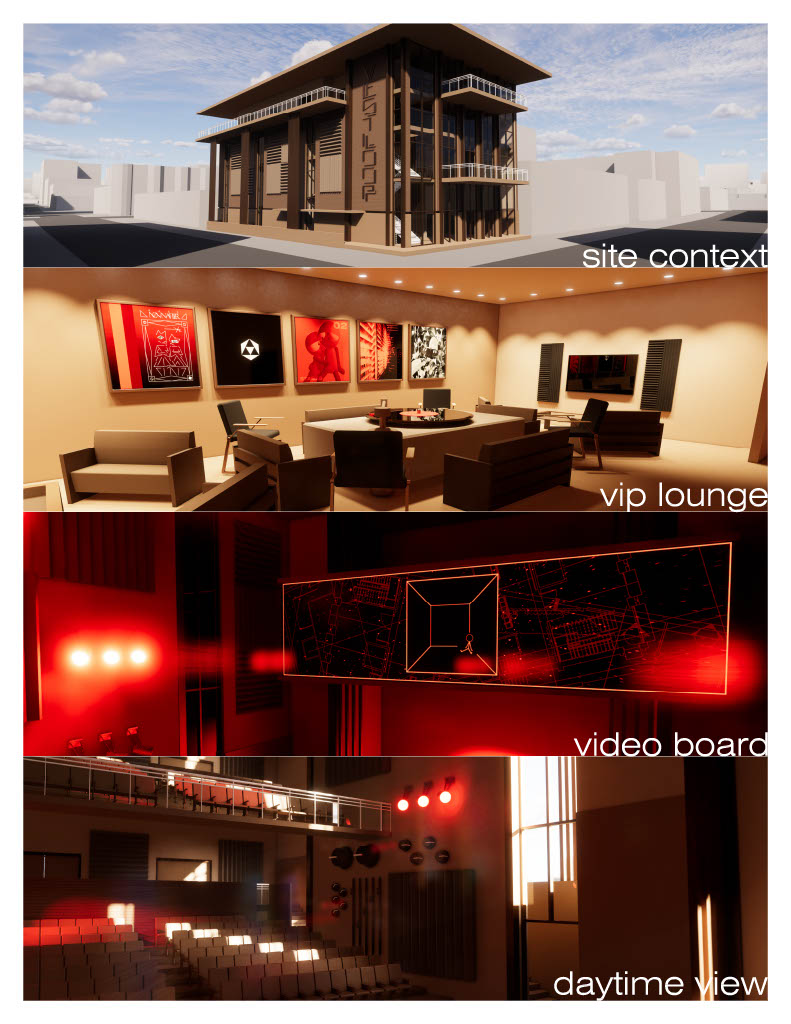
The other project, and by far the one I'm most proud of, was our design for a music hall in Chicago. I researched the musical history of the area and found that a lot of the modern Club and House music, a genre I enjoyed at that time, originated here. I designed an entire music venue full of life-size controls that one would see on various synths and drum machines that would be used in the genre's infancy. In the top level were rooms where aspiring producers could learn how to use music software or learn about the history of House and Club music. In the basement level was a practice stage, VIP lounge, and a few recording studios. The driving narrative here was that the design celebrated the entire career of a music producer - from beginning inspiration, to education and experimentation, recording, debut, and stardom. This became my largest Revit model at the time, full of custom-modeled furniture families, entourage, lighting systems, and highly detailed renderings. I learned a bunch about creating the best plans, elevations, and sections for a presentation, as well as building an identity for the building using graphic design.
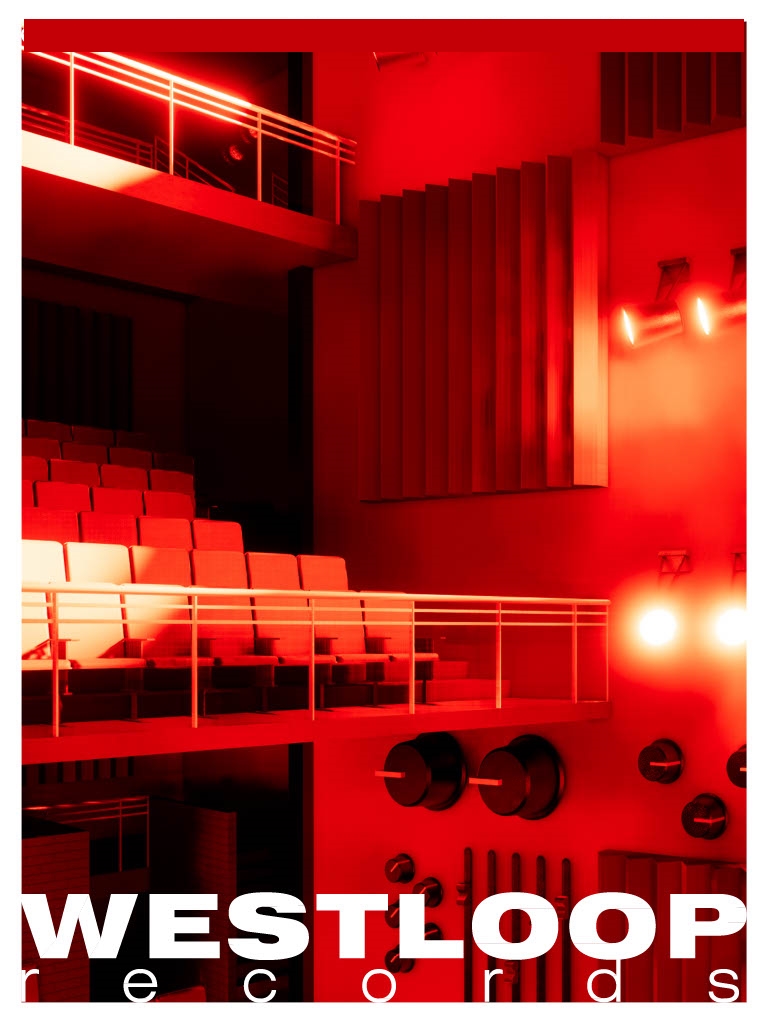
My passion was rewarded as I won fourth place in the design competition surrounding this project out of the entire grade, not just my studio!
During our second semester, our main project was to create a "tool library," which, similar to a traditional library with books, would be a place to check out various types of equipment. In the wake of my previous project, I chose to design a media library - people could check out equipment for audio, video, photo, and other creative mediums. For example, if you needed equipment to make a project for a film class, you could check out a video camera, some microphones, and flash storage. You could then go to one of the recording studios on the second floor and work on your project there. The design also includes a computer lab for anyone who needs to use software to edit or print anything. If you didn't know how to use the software, there are also classrooms in the building where you could sign up for free to learn any software you'd like. Everything that would normally need access is on the first floors, while the bulk storage is hosted on the top floor...
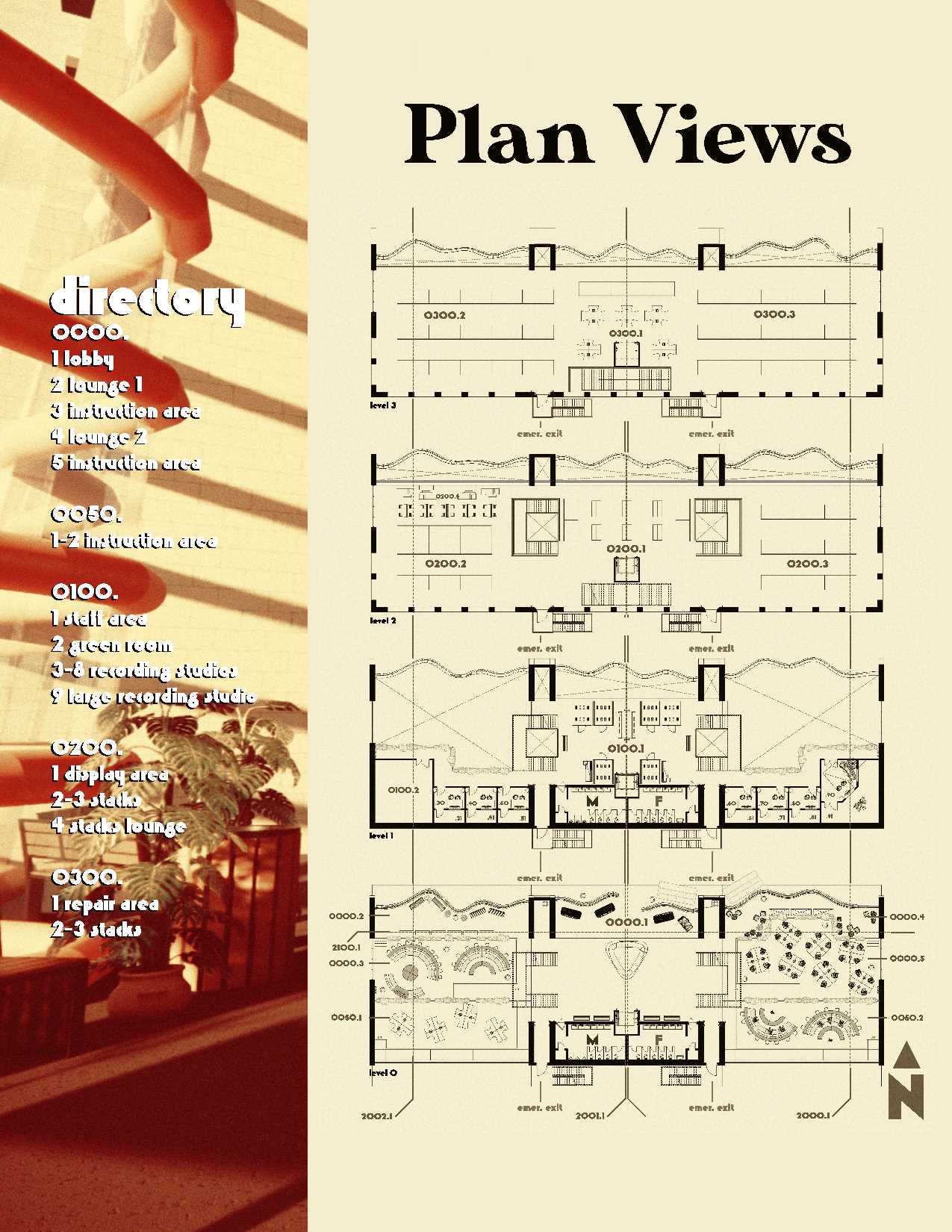
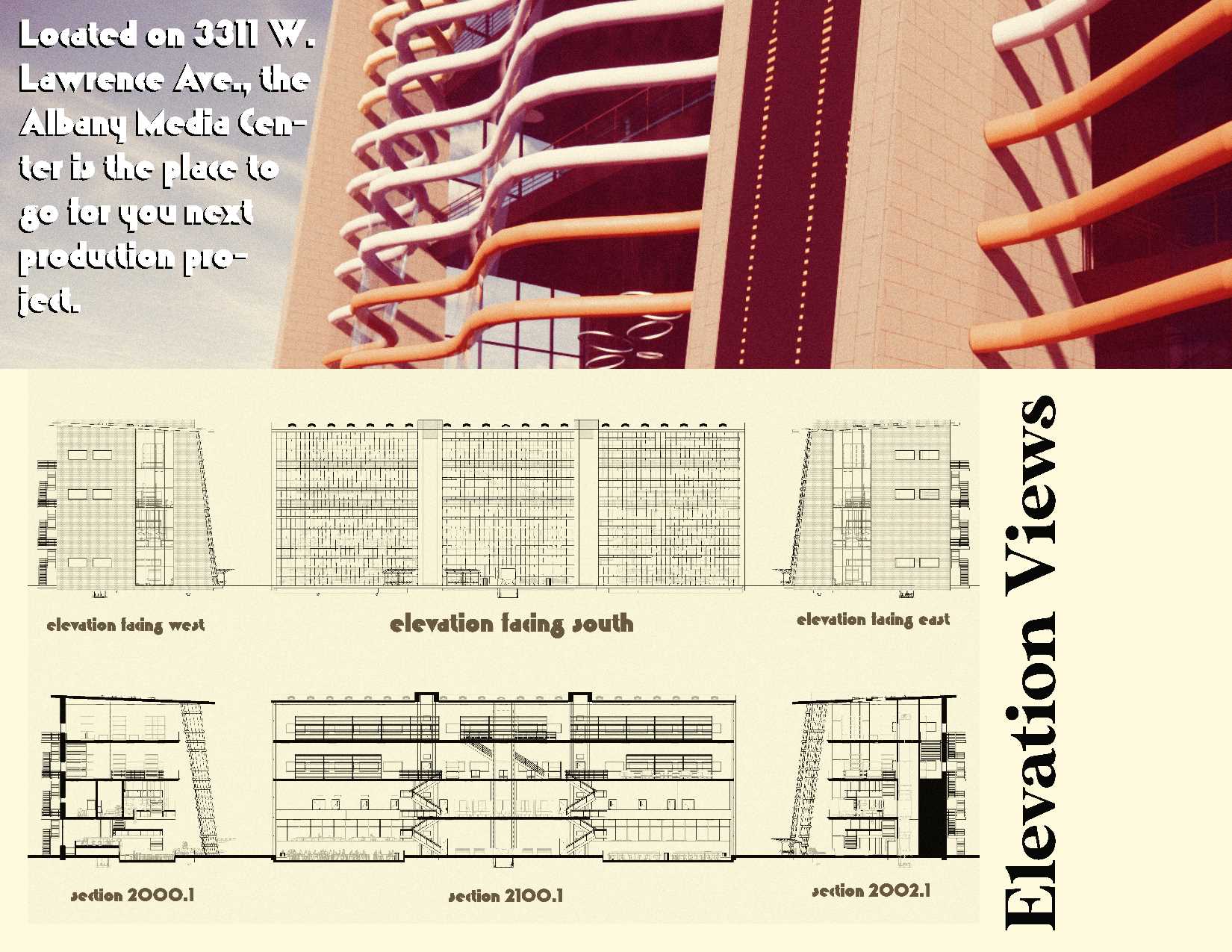
...The facade has these ribbons on them, but WHY? In the early stages of the design process, our professor brought in various leftovers from his own creative projects and instructed us to take whatever was sitting around and use it to create a rough form that we'd be working with for the rest of the design process. The ribbons came from me cutting thin strips of paper and weaving them between some straws. Looking back on it, I should have done away with them sooner than later. The rest of the design is fine. I used many more custom Revit families than the music hall, including ones from Enscape. The boards I created for this one are also by far the most "artistic," maybe at the expense of legibility, but from what I can see, the building programming was my best work at that time.
Academic year 2023
Fourth year of university; more architectural history courses, as well as one that focused on Roman architecture. We also took a course on mechanical and electrical equipment and learned how to design for plumbing, HVAC, and lighting systems, as well as acoustics. I also took an "architectural graphic design" class, which was a good help for developing myself creatively outside architecture.
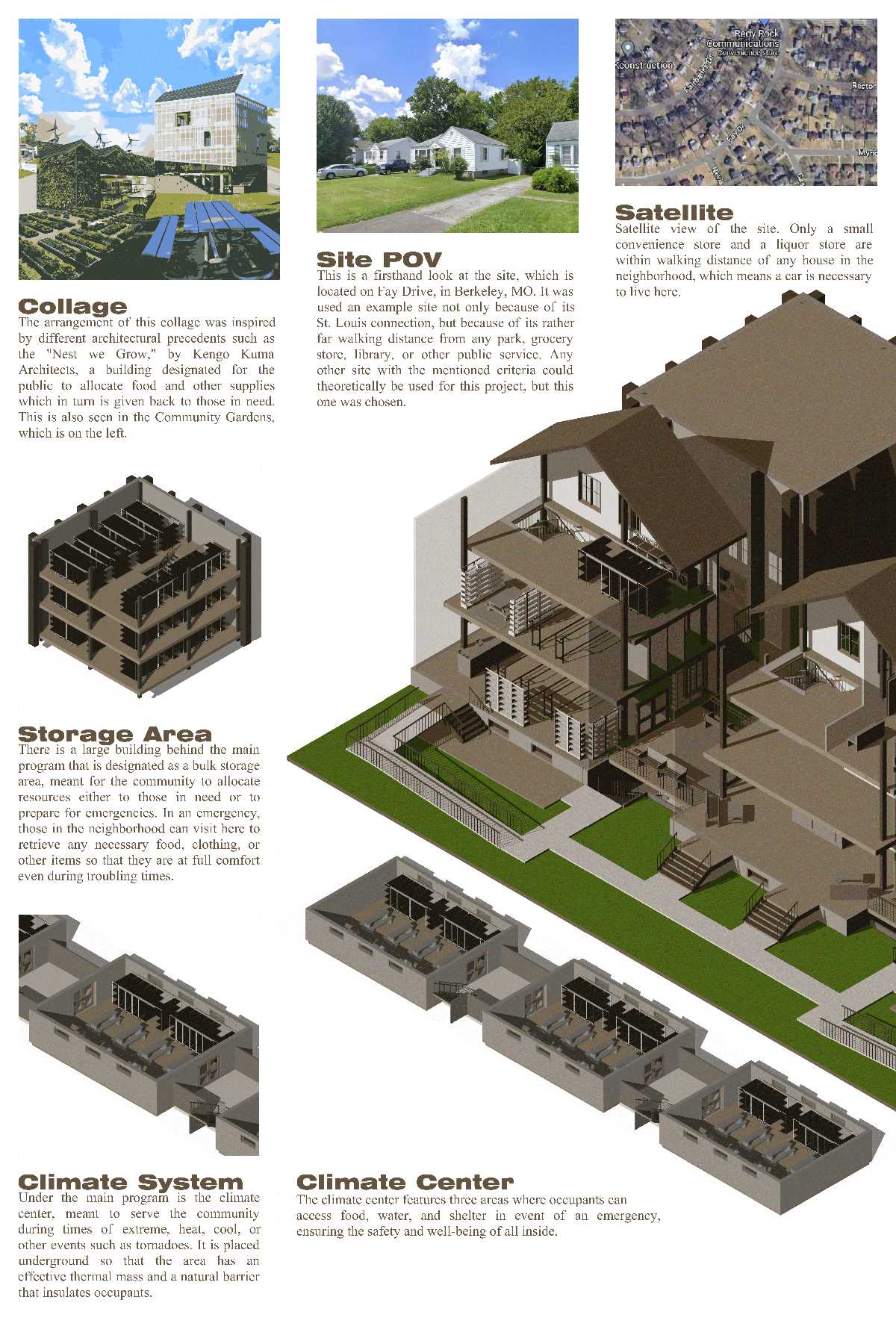
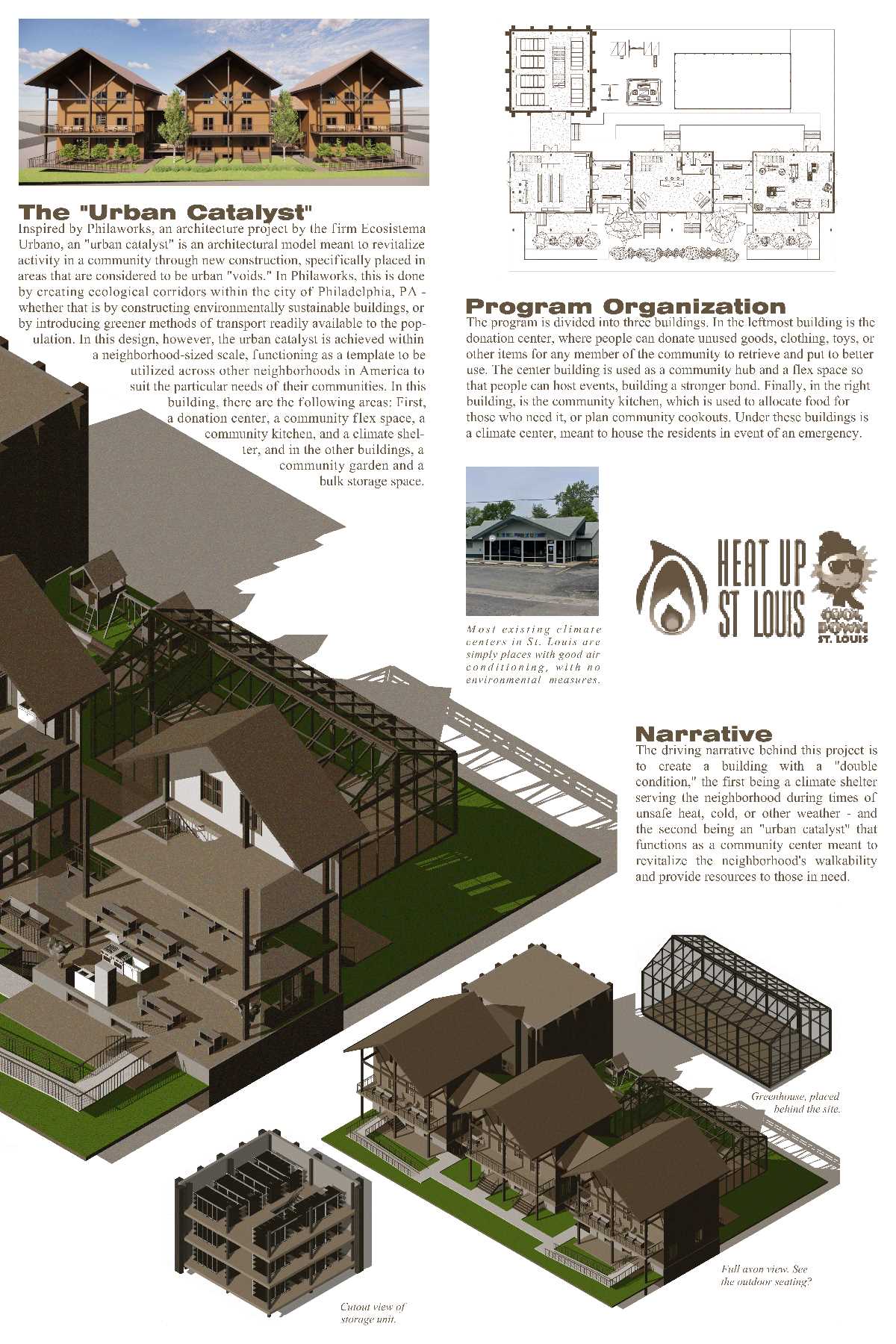
Our first semester project was again an urban intervention, but instead of being given an existing project site, we were allowed to choose our own. I decided to create a building typography that could be applied anywhere given minor tweaks, but used the St. Louis area as my example. The driving force behind the project were the sibling charities, Heat Up and Cool Down St. Louis - both of which aim to assist people with staying safe during extreme weather conditions. The charity designated various places as "heating or cooling" centers, but these places would usually end up being existing facilities of questionable operational condition. The project I worked on functioned as a statement on the effect humanity has had on the Earth's climate, as well as one on the limited access of anything without motor transport. It would function as an "urban catalyst," meant to revitalize voids in the urban landscape by providing the immediate area with resources that normally would be too far out of reach, the most important being the Climate Center, a dedicated place to retreat to in extreme weather. Included was also a large storage facility, a greenhouse, a playground, a community kitchen, and a generalized gathering space. The hope was that by creating a building like this in the center of each neighborhood, the community would be more motivated to come together and spend time with each other - a sort of "third space" that people have been asking for for years.
My final project was a revitalization project of a ruined building on Roosevelt Island in New York. The group and I decided to design a museum dedicated to different types of infectious diseases and viruses. From the exterior are these spore-like protrusions which gave the impression that the building itself had a virus too. Visitors could walk around to see scaled-up verions of different viruses, learn about their history, effects, and cures. In the cost of attendance we also planned to split the revenue between maintaining the business and donating to charaties dedicated to curing disease.
After everything was said and done, I turned my attention to looking for an internship, and luckily, I found one not too far away from where I live. I graduated with a Bachelor's degree in Architecture, and decided to put a pause on studies to work for a while.
2024-now
In the days after school, I worked toward my internship gaining much-needed Revit experience... see the "Portfolio" tab for a more detailed insight on what I've done in my working career!